

New & Noteworthy
-
2013 Iowa Short Fiction Award Winners Announced
March 4, 2013The University of Iowa Press is pleased to announce the winners of the 2013 Iowa Short Fiction Awards. Tessa Mellas is the winner of the 2013 Iowa Short Fiction Award for her collection Lungs Full of Noise. Kate Milliken's If I'd Known You Were Coming is the winner of the 2013 John Simmons Short Fiction Award. The recipients were selected by Julie Orringer, author of The Invisible Bride and How to Breathe Underwater.
Tessa Mellas's stories have appeared in 52 Stories, Crazyhorse, Gulf Coast, Hayden’s Ferry Review, and StoryQuarterly. Born in northern New York, she lived her childhood in ice rinks and competed in synchronized skating. A devoted vegetarian and environmentalist, she lives in Columbus, Ohio, with her husband and two cats and teaches writing at Ohio State University. Kate Milliken’s stories have appeared in Fiction, New Orleans Review, Five Chapters, and Santa Monica Review, among others. A graduate of the Bennington College Writing Seminars, the recipient of fellowships from the Vermont Studio Center and the Tin House summer writing workshops, Kate has also written for television and commercial advertising. She currently teaches for the UCLA Extension Writers’ Program and lives in Mill Valley, California, with her family.
In the thirteen stories of Lungs Full of Noise, Mellas explores a femininity that is magical, raw, and grotesque. Aghast at the failings of their bodies, this cast of misfit women and girls set out to remedy the misdirections of their lives in bold and reckless ways. Figure skaters screw skate blades into the bones of their feet to master elusive jumps. A divorcée steals the severed arm of her ex to reclaim the fragments of a dissolved marriage. But it is not only the characters who are in crisis; personal disasters mirror the dissolution of the natural world. The sky erupts with feathers as all the birds in a city crash into glass towers. In another story, all the color has drained from the sky and grandmothers believe the whiteness will blind everyone. Orringer says, “Mellas is a visionary, possessed of the ability to take us to worlds we’ve never imagined but that reveal our all-too-familiar hopes, fears, and vulnerabilities. Her stories are lyrical, laced with exquisite detail and image. They show their intelligence not only through their originality but also, and perhaps more importantly, through their sense of humor. Our children may baffle us, bodies may deceive us, our friends may confound us, but at least, these stories suggest, we are not alone. Tessa Mellas has made our human community richer with this deeply original and unforgettable book.”
In If I'd Known You Were Coming, Milliken shows us what can happen when the uninvited guest of our darkest desires comes to call. Whether surrounded by the white noise of a Hollywood celebration or enduring a stark winter in Maine, these characters yearn to heal old wounds with new hurts. In “A Matter of Time,” a mother driven by greed unwittingly finds out how far her needs will allow her to go. A hand model surprises himself and everyone else at the birthday party of an old friend’s daughter. In “Names for a Girl,” a woman evaluates the meaning of the familial stories that we carry with us from birth. These stories about family, desire, betrayal, love, and regret possess that uncanny ability to reveal us to ourselves. Orringer says, “Milliken's stories burn straight to the darkest places in our hearts, speaking aloud the thoughts we hardly dare to call our own. In twelve flawless pieces, Milliken expertly illuminates the aftermath of abandonment; her characters, cast adrift, find themselves painfully alone, futilely seeking what was torn away long ago. Milliken writes with merciless precision about women and men, about the old and the young, about the betrayers and betrayed. You will stay up all night to learn the fates of these people, who will become as real to you as anyone you know.”
The short fiction awards are given to a first collection of fiction in English and are administered through the Iowa Writers’ Workshop. The honors are national in scope and have been given since 1969. The John Simmons Short Fiction Award (named for the first director of the University of Iowa Press) was created in 1988 to complement the existing Iowa Short Fiction Award.
-
Wheeler's 'Meme' up for National Book Award
October 24, 2012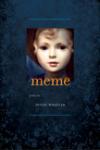
Susan Wheeler’s Meme, the latest offering from the University of Iowa Press's Kuhl House Poets series, has been selected as a finalist for this year's National Book Award.
Wheeler, who formerly taught at the Iowa Writers’ Workshop, said of the selection, “As Ma would have said, 'Well, I'm flabbergasted.' (As she would have been!) I'm also tremendously honored for the company and the consideration.”
The awards will be presented Nov. 14 at a ceremony in New York City.
A meme is a unit of thought replicated by imitation. Occupy Wall Street is a meme, as are Internet ideas and images that go viral.
But what could be more potent memes than those passed down by parents to their children? Wheeler reconstructs her mother’s voice—down to its cynicism and its mid-20th-century midwestern vernacular—in “The Maud Poems.” That voice takes a more aggressive, vituperative turn in “The Devil—or —The Introjects.” In the book’s third long sequence, a generational inheritance feeds cultural transmission in “The Split.” A set of variations on losses and break-ups—wildly, darkly funny throughout and, in places, devastatingly sad—“The Split” brings Wheeler’s lauded inventiveness, wit, and insight to the profound loss of love.
"This is a well-deserved honor for Susan. The National Book Award stands as the pinnacle of recognition for individual literary works, the nominees represent the best of the best in a given year,” says Jim McCoy, UI Press director. “Wheeler's talent and hard work shines on every page. This is such a personal work it can't help but touch anyone who reads it. She's an absolute delight to work with. Congratulations also to Mark Levine, who edits our Kuhl House Poets series. It is his vision that makes this possible. The Press is so honored to be publishing Meme.”
Poet Mary Jo Bang, author of The Bride of E, says, "In Meme, the traditional elegy dissolves into excited bursts of imitated idiomatic speech interwoven with writing from a different register—the coolly removed, self-insightful lyric. That the elaborately constructed edifice that is personality can be reconstructed with such fascinating economy and delightful indirection is amazing. These poems are pure poetic genius."
And poet Rae Armantrout, author of Money Shot, says, "Meme is a haunted work. We are ushered in by the disembodied voice of a mother figure, scolding and teasing in the time-stamped slang of past decades. The anachronism is both funny and terribly sad. 'Don't come in here all bright-eyed and bushy-tailed,' the voice says. And it turns out that's fair warning. This cracked Virgil leads us into a consciously Dantean underworld ('Had you entered the thicket in darkness / . . . Had you been mid-life, not in haze but in crisis?'). Wheeler has created a total (and to me terrifying) linguistic environment in which hell is the introjected voices of other people, the hungry ghosts of our recent past."
Wheeler is the author of the poetry collections Bag ‘o’ Diamonds, which received the Norma Farber First Book Award of the Poetry Society of America and was shortlisted for the Los Angeles Times Book Award;Smokes, which won the Four Way Books Award in 1998; and Source Codes;Ledger, winner of the Iowa Poetry Prize; and Assorted Poems. Her novel,Record Palace, was published in 2005. On the creative writing faculties at Princeton University and The New School's graduate program, she lives in Rocky Hill, N.J.
Like the historic stone building, home of the UI Press, from which this series draws its name, the Kuhl House Poets combine the best of dedicated craft and contemporary vision. This provocative series reawakens readers to a fresh consideration of the possibilities of language and feeling by publishing work that is formally and verbally inventive, adventurous work that takes its own path outside established routes of either traditions or experimental poetry.
Featured book(s): -
Paul Lindholdt Wins 2012 Washington State Book Award
September 14, 2012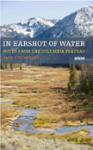
Paul Lindholdt's In Earshot of Water illuminates the Pacific Northwest in vivid detail. Whether the subject is the plants that grow there, the animals that live there, the rivers that run there, or the people he has known there, Lindholdt writes with the precision of a naturalist, the critical eye of an ecologist, the affection of an apologist, and the self-revelation and self-awareness of a personal essayist. Exploring both the literal and literary sense of place, with particular emphasis on environmental issues and politics in the far Northwest, Lindholdt weds passages from the journals of Lewis and Clark, the log of Captain James Cook, the novelized memoir of Theodore Winthrop, and Bureau of Reclamation records growing from the paintings that the agency commissioned to publicize its dams in the 1960s and 1970s, to tell ecological and personal histories of the region he knows and loves.
The Washington State Book Awards are presented annually in recognition of notable books written by Washington authors in the previous year. This literary awards program was established in 1967 as the Governor's Writers Awards. The program was based at the Washington State Library in Olympia. Each year up to ten outstanding books of any kind written by Washington authors in the previous year were recognized with awards based on literary merit, lasting importance, and overall quality of the publication. In 2001 the Washington Center for the Book, based at the Seattle Public Library, took over the administration of the program and it was renamed the Washington State Book Awards.
Additional praise for In Earshot of Water:
“To read In Earshot of Water is to enter the mind of a first-rate naturalist, a devoted father, and a keen observer of all the confounding ways people find to live in place. To read this book is to learn again how to listen, how to forgive, and ultimately, how to love life that is sometimes as cruel as it is beautiful.”—Kathleen Dean Moore, author, Wild Comfort
“As it moves from the personal to the social, historical, and environmental aspects of the northwestern landscape, Paul Lindholdt’s In Earshot of Water beguiles and teaches. Lindholdt’s prose is a pleasure to read, and his personal presence is palpable but never intrusive. It is a tough trick, what he’s done, and I admire it. The book ought to be of interest to readers of environmentally conscious literature, residents and lovers of the Northwest, and students of good, clear, concise writing everywhere.”—Philip Connors, author, Fire Season: Field Notes from a Wilderness Lookout
Paul Lindholdt is a professor of English at Eastern Washington University. He has collaborated on the books Cascadia Wild: Protecting an International Ecosystem; The Canoe and the Saddle: A Critical Edition; John Josselyn, Colonial Traveler: A Critical Edition of “Two Voyages to New-England”; and Holding Common Ground: The Individual and Public Lands in the American West.
Featured book(s): -
2012 Iowa Poetry Prize Winner Announced: Winning Collection to be Published in Spring 2013
August 14, 2012In thrilling poems of metamorphosis and birth, death and dissolution, Stephanie Pippin’s debut collection, The Messenger, returns us to a world unshorn of wildness. Delivering accident and hunger, love and grief, Nature in these poems is beautiful and brutal, “a hellish magnificence” that both invites and denies the meanings we project onto it. Refusing the domesticated comfort of our usual myths, Pippin reminds us of our place as creatures among others in a world where “what isn’t dead / is dying,” and where the thrill of predatory flight commingles with the desperation of the prey.
This mesmerizing and astonishingly assured collection confronts readers with the hard master of necessity—that “angel stinking of his own / excitement”—leaving them bare before what Mallarmé called “the horror of the forest,” helpless to do anything to save what we love. The poems deliver a message as harrowing as it is essential, insisting that our sole task is to look on while we can, and to love harder.
Poet Mary Jo Bang says "These fierce poems form a Darwinian compendium with speakers who empathically merge with everything feathered and furred. There’s a odd democracy here, the fresco swan on the Pompeii wall and the clamp of a falcon digging its talons into a glove both speak equally of mystery, fragility, and the future we stand to lose when we turn our backs on nature: ‘The weight of this / is more than you imagined.’ These poems have a Keatsian beauty to them, and a Keatsian truth. In other words, everything we need to know."
Stephanie Pippin's poems have appeared in Best New Poets 2010, Ploughshares, Boston Review, and The Iowa Review. She lives in St. Louis, Missouri.
Awarded annually by the University of Iowa Press, the Iowa Poetry Prize is one of the leading national poetry awards. The acclaimed competition is open to new as well as established poets. Recent winners of the prize include Natural Selections by Joseph Campana, Grand & Arsenal by Kerri Webster, Like a Sea by Samuel Amadon, and A Little Middle of the Night by Molly Brodak.
Featured book(s): -
2012 Iowa Short Fiction Award Winners Announced
February 3, 2012The University of Iowa Press is pleased to announce the winners of the 2012 Iowa Short Fiction Awards. Marie-Helene Bertino is the winner of the 2012 Iowa Short Fiction Award for her collection Safe as Houses. Chad Simpson's Tell Everyone I Said Hi is the winner of the 2012 John Simmons Short Fiction Award. The recipients were selected by Jim Shepard, author of You Think That's Bad: Stories.
Marie-Helene Bertino's stories have appeared in The Pushcart Prize Anthology XXXIII, North American Review, Mississippi Review, Inkwell, The Indiana Review, American Short Fiction, and West Branch. She received a Pushcart prize in 2007 and a Pushcart Special Mention in 2011, which is also the year she was chosen as a Center for Fiction NYC Emerging Writer's Fellow. She hails from Philadelphia and lives in Brooklyn, where for six years she was the associate editor of One Story. Chad Simpson was raised in Monmouth, Illinois, and Logansport, Indiana. His work has appeared in McSweeney’s Quarterly, Esquire, American Short Fiction, The Sun, and many other print and online publications. He is the recipient of a fellowship in prose from the Illinois Arts Council and scholarships from the Bread Loaf and Sewanee writers’ conferences. He teaches at Knox College in Galesburg, Illinois, where he received the Philip Green Wright/Lombard College Prize for Distinguished Teaching in 2010.
Marie-Helene Bertino's Safe as Houses is nothing if not original. Each story has a dream-like quality reminiscent of the writing of Donald Barthelme, complete with skewed vision and unexpected and often magical twists and turns. The title story revolves around an aging English professor who, mourning the loss of his wife, robs homes of sentimental knick-knacks. In “Free Ham,” a young dropout wins a ham after her house burns down but at first refuses to accept it. “Has my ham done anything wrong?” she asks, when the grocery store manager demands that she claim it. In “Carry Me Home, Sisters of Saint Joseph,” a failed commercial writer moves into the basement of a convent and inadvertently discovers the secret lives of the Sisters of Saint Joseph. A girl, hoping to talk her brother out of enlisting in the army, brings Bob Dylan home for Thanksgiving dinner in the quiet, dreamy “North Of.” In and out of the rooms of these gritty, whimsical stories roam troubled, funny people struggling to reconcile their circumstances to some kind of American Ideal and failing, over and over. Along the way, Bertino subjects a cockeyed but unflinching gaze on a world where not all homes are shelters. The stories in Safe as Houses are as hilarious as they are heartbreaking. Bertino's characters are often their own worst enemies, but their ceaseless search for redemption—in whatever ways it might come—leave you rooting for each of them to succeed.
The world of Chad Simpson's Tell Everyone I Said Hi is geographically small but far from provincial in its portrayal of emotionally complicated lives. With all the earnestness of a Wilco song, these eighteen stories roam the small-town playgrounds, blue-collar neighborhoods, and rural highways of Illinois, Indiana, and Kentucky to find people who’ve lost someone or something they love and have not yet found ways to move forward. In “Peloma,” a steel worker grapples with his teenage daughter’s feeble suicide attempts while the aftermath of his wife’s death and the politics of factory life vie to hem him in. The narrator of “Fostering” struggles to determine the ramifications of his foster child’s past now that he and his wife are expecting their first biological child. In just two pages, “Let x” negotiates the yearnings and regrets of childhood through mathematical variables and the summertime interactions of two fifth-graders. Poignant, fresh, and convincing, these are stories of women who smell of hairspray and beer and landscapers who worry about their livers, of flooded basements and loud trucks, of bad exes and horrible jobs, of people who remain loyal to sports teams that always lose. Displaced by circumstances both in and out of their control, the characters who populate Tell Everyone I Said Hi are lost in their own surroundings, thwarted by misguided aspirations and long-buried disappointments, but fully open to the possibility that they will again find their way.The short fiction awards are given to a first collection of fiction in English and are administered through the Iowa Writers’ Workshop. The honors are national in scope and have been given since 1969. The John Simmons Short Fiction Award (named for the first director of the University of Iowa Press) was created in 1988 to complement the existing Iowa Short Fiction Award.
-
2011 Iowa Poetry Prize Winners Announced: Winning Collections to Be Published in Spring 2012
September 16, 2011Awarded annually by the University of Iowa Press, the Iowa Poetry Prize is one of the leading national poetry awards. The acclaimed competition is open to new as well as established poets. Natural Selections by Joseph Campana and Grand & Arsenal by Kerri Webster will be published by the University of Iowa Press in the spring of 2012.
With a boldness of vision that might overwhelm a lesser talent, Joseph Campana’s Natural Selections is a collection guided by a focused intelligence and yet containing wonderment and awe at its heart. From wandering the paths of the imagination, to driving through sparsely populated countryside, or listening for the voices of animals, these poems find the simplicity and strangeness of middle America, a complex metaphysics of place and an uncanny perspective reminiscent of landscapes of Grant Wood. Birds and beasts, frequent storms, country roads, a fraught election, and some of Ohio’s literary guardian angels (James Wright, Hart Crane, and Sherwood Anderson), haunt the poems. Whether enigmatically refracted or brutally direct, Natural Selections attends to the way life is beautifully, violently, and unexpectedly marked by place.
Joseph Campana teaches Renaissance literature at Rice University. His poems have appeared in Slate, Kenyon Review, Poetry, Conjunctions, Colorado Review, and many other venues. His first book of poetry, The Book of Faces, was published in 2005. He is also the author of The Pain of Reformation: Spenser, Vulnerability, and the Ethics of Masculinity (2012).
Kerri Webster’s award-winning Grand & Arsenal speaks from the intersection of public and private fear, of anxiety and awe, vanishings and reappearances, where a city both rises and falls and worlds are simultaneously spoken into being and torn down by words. Grand & Arsenal begins “Bless me I am not myself,” but it is not long before the probability of being blessed is revealed to be as remote as the concept of a whole self. Thus begins the book’s defining struggle. This endeavor is enacted by a multitude of voices, which move from rush to stumble and back again—meanwhile using all the tools we use as a culture to hold fear at arm’s length. We hear a familiar irony, humor, and understatement, but most importantly these poems allow for the fleeting triumph of an undefended voice, which appears often to emerge tentatively from a sort of exhausted collapse.
Kerri Webster is the author of a previous full-length collection, We Do Not Eat Our Hearts Alone (2005), well as two chapbooks: Psalm Project (2009) and Rowing Through Fog (2003). Writer in Residence at Washington University in St. Louis from 2006 to 2010, she currently lives and writes in her native Idaho.
Recent winners of the prize include Cloud of Ink by L. S. Klatt, Unbeknownst by Julie Hanson, Like a Sea by Samuel Amadon, and A Little Middle of the Night by Molly Brodak.
-
University of Iowa Press Champion Duane Spriestersbach Passes Away
April 29, 2011Duane C. Spriestersbach, the primary force behind the expansion of the University of Iowa Press in 1984, died April 25 at Mercy Hospital in Iowa City. He was 94.
Spriestersbach—or simply "Sprie" (pronounced "Spree") to his many friends and colleagues—is the author of Psychosocial Aspects of the “Cleft Palate Problem” (1973) one of the first books ever published by the University of Iowa Press, as well as The Way It Was: The University of Iowa, 1964–1989, published by UI Press in 1999. Former director Holly Carver said, “Sprie's creative energy, practical know-how, and wide-ranging perspective made him an invincible force for good for the UI community. I will be forever grateful for his financial and organizational support—so generously and charmingly given—during the expansion of the UI Press.”
Spriestersbach earned master's and doctoral degrees from the UI in 1940 and 1948. He served as Graduate College dean from 1965 to 1989 and vice president for research from 1966 to 1970, when he was named vice president for educational research and development. He also served as interim UI president for seven months from 1981 to 1982, between the administrations of Willard "Sandy" Boyd and James Freedman. His numerous UI achievements include launching the Technology Innovation Center, helping develop the Oakdale campus, supporting the establishment of the Center for the Book, and starting the Cleft Palate Research Program—one of the university's longest-running National Institutes of Health partnerships—in 1955.
Read more about Sprie’s life and career in this June 2010 profile <http://www.uiowa.edu/be-remarkable/portfolio/people/spriestersbach-d.html>. See http://lensingfuneral.myfuneralwebsite.com/ for information about the May 15 memorial service.
-
2011 Iowa Short Fiction Award Winners Announced
February 10, 2011The University of Iowa Press is pleased to announce the winners of the 2011 Iowa Short Fiction Awards. Will Boast is the winner of the 2011 Iowa Short Fiction Award for his collection Power Ballads. Josh Rolnick's Pulp and Paper is the winner of the 2011 John Simmons Short Fiction Award. The recipients were selected by Yiyun Li, author of Vagrants.
Will Boast was born in England and grew up in Ireland and Wisconsin. His fiction has appeared in Best New American Voices 2009, Narrative, Glimmer Train, the Southern Review, Mississippi Review, and other publications and is forthcoming in the American Scholar. He holds an MFA from the University of Virginia and is a former Stegner Fellow at Stanford University. Currently, he lives and writes in San Francisco, and also moonlights as a performing musician around the Bay Area. He's working on both a novel and a memoir.
Power Ballads is collection of ten stories devoted to those working musicians who have spent their young lives in practice rooms and recital halls, devoting themselves utterly to their instruments, only to toil in the obscurity of coffee shops, casinos, and small-town music festivals. The loosely connected stories feature several recurrent characters born out of the sometimes glamorous, sometimes dreary nocturnal world of musicians. For all of them, music is most often simply work, but in rare moments it becomes a source of grace and transcendence, speaking about the things we can never seem say to each other. The characters in Power Ballads—techno DJs, aging head-bangers, jobbers, songwriters, groupies, critics, and the occasional rock star (and the people who have to live with them)—need music to survive, yet they are often lost when the last note is played, the last set ends, the lights go up, and they have to return to regular life.
Josh Rolnick’s short stories have won the Arts & Letters Fiction Prize and the Florida Review Editor’s Choice Prize. His stories have also been published in Harvard Review, Western Humanities Review, Bellingham Review, and Gulf Coast, and have been nominated for the Pushcart Prize and Best New American Voices. He grew up in Central Jersey, and divided his summers and winters between the Jersey Shore and Upstate New York. A reporter, editor, and journal publisher, he has lived in Jerusalem, London, Philadelphia, Washington D.C., Menlo Park, CA, and Iowa City. He currently lives in Akron, Ohio, with his wife, Marcella, and three sons, Meyer, Heshel, and Lev.The eight stories in Pulp and Paper trace the effects of life-changing events on everyday people. In “Funnyboy,” grief stricken Levi Stern attempts to come to terms with the banality of his son’s accidental death at the hands of high school cheerleader Missy Jones. In “Pulp and Paper” two neighbors, Gail Denny and Avery Mayberry, are attempting to escape a toxic spill as a result of a train derailment when a moment of compassion alters both their futures forever. “Innkeeping” is the story of a teenager’s simmering resentment toward the burgeoning relationship between his widowed mother and a long-term guest. And in “The Herald,” a devoted reporter on a small-town newspaper attempts to break a big story to salvage his career (and his ego), only to find his over-eagerness sabotages it instead.
The short fiction awards are given to a first collection of fiction in English and are administered through the Iowa Writers’ Workshop. The honors are national in scope and have been given since 1969. The John Simmons Short Fiction Award (named for the first director of the University of Iowa Press) was created in 1988 to complement the existing Iowa Short Fiction Award.
-
UI Press Books Named Outstanding Academic Titles by Choice Magazine
January 5, 2011The University of Iowa Press books Brave New Words by Elizabeth Ammons and After the End of History by Samuel Cohen have been named Outstanding Academic Titles by Choice magazine.
A publication of the Association of College and Research Libraries, a division of the American Library Association, Choice publishes reviews of current books and electronic media of interest to those in higher education. It is recognized as an essential tool for collection development in academic libraries. This prestigious list reflects the best in scholarly titles reviewed by Choice and brings with it the extraordinary recognition of the academic library community.
This year’s Outstanding Academic Titles list contains approximately ten percent of some 7,000 works reviewed in Choice each year. Choice editors base their selections on the reviewer's evaluation of the work, the editor's knowledge of the field, and the reviewer's record. The list was known as Outstanding Academic Books until 2000. The new name reflects an increase in reviews of electronic products and Internet sites.
Brave New Words challenges present and future literary scholars and teachers to look beyond mere literary critique toward the concrete issue of social change and how to achieve it. Calling for a profound realignment of thought and spirit in the service of positive social change, Ammons argues for the continued importance of multiculturalism in the twenty-first century despite attacks on the concept from both right and left. Concentrating on activist U.S. writers—from ecocritics to feminists to those dedicated to exposing race and class biases, from Jim Wallis and Cornel West to Winona LaDuke and Karen Armstrong and many others—she calls for all humanists to link their work to the progressive literature of the last half century, to insist on activism in the service of positive change as part of their mission, and to teach the power of hope and action to their students.
In After the End of History, Samuel Cohen asserts the literary and historical importance of the period between the fall of the Berlin wall and that of the Twin Towers in New York. With refreshing clarity, he examines six 1990s novels and two post-9/11 novels that explore the impact of the end of the Cold War: Pynchon's Mason & Dixon, Roth's American Pastoral, Morrison's Paradise, O'Brien's In the Lake of the Woods, Didion's The Last Thing He Wanted, Eugenides's Middlesex, Lethem's Fortress of Solitude, and DeLillo's Underworld. Cohen emphasizes how these works reconnect the past to a present that is ironically keen on denying that connection. Exploring the ways ideas about paradise and pastoral, difference and exclusion, innocence and righteousness, triumph and trauma deform the stories Americans tell themselves about their nation’s past, After the End of History challenges us to reconsider these works in a new light, offering fresh, insightful readings of what are destined to be classic works of literature.
Featured book(s): -
A New Way to Get Galleys & Review Copies: The University of Iowa Press Joins NetGalley
October 25, 2010Attention media, reviewers, and bloggers: the University of Iowa Press is now a subscriber to NetGalley, a new online service for the electronic delivery of galleys and press materials. It provides us with the wonderful opportunity of distributing these materials to the media electronically and saving thousands upon thousands of pages of paper.
What’s great about NetGalley is that you will be able to register and use this service to view new titles from us at no cost. You can read galleys and review copies online, download PDF versions, read on your Kindle or Sony Reader, and search within galleys. Through NetGalley, you can view marketing materials, book trailers, photos, author bios, cover art, and more. Plus, NetGalley will reduce our environmental impact by utilizing digital content to get our titles into your hands faster!
Registration is free. Please visit www.netgalley.com to register and to request our galleys and review copies. Find our titles by searching for the University of Iowa Press in the public catalog area.
For inquiries about the University of Iowa Press, our authors and titles, or NetGalley, please contact Allison Means at [email protected]. -
2010 Iowa Poetry Prize Winners Announced: Winning Collections to Be Published in Spring 2011
July 12, 2010Awarded annually by the University of Iowa Press, the Iowa Poetry Prize is one of the leading national poetry awards. The acclaimed competition is open to new as well as established poets. Unbeknownst by Julie Hanson and Cloud of Ink by L. S. Klatt will be published by the University of Iowa Press in spring of 2011.
Julie Hanson’s collection, Unbeknownst, gives us plainspoken poems of unstoppable candor. They are astonished and sobered by the incoming data; they are funny; they are psychologically accurate and beautifully made. Hanson’s is a mind interested in human responsibility—to ourselves and to each other—and unhappy about the disappointments that are bound to transpire (“We’ve been like gods, our powers wasted”). These poems are lonely with spiritual longing and wise with remorse for all that cannot last. Her poem, “The Kindergartners,” begins, “All their lives they’ve waited for / the yellow bus to come for them,” then moves directly to the present reality: “Now it’s February and the mat / is wet.” Settings and events are local, familiar, never more exotic than a yoga session at the Y, one of several instances where the body is central to the report and to the net result (“My organs are surely glistening. This car was made for me.“). These poems are intimate revelations, thinking as they go, including the reader in the progress of their thought.
Julie Hanson is coordinator of a food-buying cooperative in Cedar Rapids, Iowa; she holds an M.A. in expository writing and an M.F.A. in poetry from the University of Iowa. Her work has earned awards and fellowships from the National Endowment for the Arts, the Vermont Studio Center, the West Chester University Conference on Narrative and Form, and the Cincinnati Review and has been published in such venues as the Michigan Quarterly Review, New Ohio Review, Iowa Review, Volt, Poetry East, Tampa Review, and Booth.
On the surface, the poems that make up L. S. Klatt's Cloud of Ink are airy and humorous—deceptively lightweight with their tales of chickens wandering the highways of Ohio and Airstream trailers rolling up to heaven and whales bumping like watermelons in a bathtub—but just under the surface they turn disconcertingly serious. Together they celebrate the fluent word. Under the heat of inquiry, under the pressure of metaphor, the poems in this collection liquefy, bend, and serpentine as they seek sometimes a new and sometimes an ancient destination. These poems present the reader with existential questions, and also side-wind into the barbaric; the pear is figured as a “wild boar” and the octopus is “gutted,” yet primal energies cut a pathway to the mystical and the transcendent. The cosmos in Cloud of Ink is loquacious and beautiful, strange and affirmative, but never transparent. Amid “a maelstrom of inklings,” the writer—and the audience—must puzzle out the meaning of the syllabary.
L. S. Klatt teaches American literature and creative writing at Calvin College in Grand Rapids, Michigan. His poems have appeared in such journals as the Boston Review, Columbia Poetry Review, Denver Quarterly, Notre Dame Review, Chicago Review, FIELD, Cincinnati Review, jubilat, Colorado Review, Iowa Review, Eleven Eleven, and Verse. His first book, Interloper, won the Juniper Prize for Poetry. He is a graduate of Wittenberg University in Springfield, Ohio, and holds advanced degrees from Gordon-Conwell Theological Seminary, St. John’s College, and the University of Georgia.
Recent winners of the prize include Like a Sea by Samuel Amadon, A Little Middle of the Night by Molly Brodak, Full Catastrophe Living by Zach Savich, and something has to happen next by Andrew Michael Roberts.
Featured book(s): -
STAGESTRUCK FILMMAKER: D.W. GRIFFITH AND THE AMERICAN THEATRE by David Mayer Selected as Finalist for the 2010 Richard Wall Memorial Award
June 22, 2010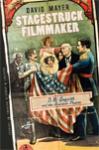
The University of Iowa Press is proud to announce that Stagestruck Filmmaker: D.W. Griffith and the American Theatre by David Mayer has been chosen as a finalist for the 2010 Richard Wall Memorial Award. Formerly known as the Theatre Library Association Award, the prize was renamed in 2010 to honor the memory of the late Richard Wall, longtime TLA member and Book Awards Chair.
An actor, a vaudevillian, and a dramatist before he became a filmmaker, D. W. Griffith used the resources of theatre to great purpose and to great ends. In pioneering the quintessentially modern medium of film from the 1890s to the 1930s, he drew from older, more broadly appealing stage forms of melodrama, comedy, vaudeville, and variety. In Stagestruck Filmmaker, David Mayer brings Griffith’s process vividly to life, offering detailed and valuable insights into the racial, ethnic, class, and gender issues of these transitional decades.
Combining the raw materials of theatre, circus, minstrelsy, and dance with the newer visual codes of motion pictures, Griffith became the first acknowledged artist of American film. Birth of a Nation in particular demonstrates the degree to which he was influenced by the racist justifications and distorting interpretations of the Civil War and the Reconstruction era. Moving through the major phases of Griffith’s career in chapters organized around key films or groups of films, Mayer provides a mesmerizing account of the American stage and cinema in the final years of the nineteenth century and the first three decades of the twentieth century.
Griffith’s relationship to the theatre was intricate, complex, and enduring. Long recognized as the dominant creative figure of American motion pictures, throughout twenty-six years of making more than five hundred films he pillaged, adapted, reshaped, revitalized, preserved, and extolled. By historicizing his representations of race, ethnicity, and otherness, Mayer places Griffith within an overall template of American life in the years when film rivaled and then surpassed the theatre in popularity.
David Mayer is emeritus professor in the Department of Drama, University of Manchester. He is the author and editor or coeditor of numerous publications in nineteenth- and twentieth-century British and American popular entertainment. His books include Harlequin in His Element: English Pantomime, 1806–1836 and Playing Out the Empire: “Ben-Hur” and Other Toga-plays and Films.
Featured book(s): -
HOW TO LEAVE HIALEAH Wins 2010 Binghamton University John Gardner Fiction Book Award
June 22, 2010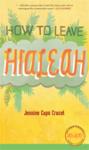
The University of Iowa Press is proud to announce that How to Leave Hialeah by Jennine Capó Crucet has been chosen as winner of the 2010 Binghamton University John Gardner Fiction Book Award, sponsored by the Binghamton Center for Writers-State University of New York with support from the Office of the Dean of Binghamton University's Harpur College of the Arts and Sciences. Previous winners include I See You Everywhere by Julia Glass, The River Wife by Jonis Agee, and Tolstoy Lied by Rachel Kadish.
United in their fierce sense of place and infused with the fading echoes of a lost homeland, the stories in Jennine Capó Crucet’s striking debut collection do for Miami what Edward P. Jones does for Washington, D.C., and what James Joyce did for Dublin: they expand our ideas and our expectations of the city by exposing its tough but vulnerable underbelly.
Crucet’s writing has been shaped by the people and landscapes of South Florida and by the stories of Cuba told by her parents and abuelos. Her own stories are informed by her experiences as a Cuban American woman living within and without her community, ready to leave and ready to return, “ready to mourn everything.”
Coming to us from the predominantly Hispanic working-class neighborhoods of Hialeah, the voices of this steamy section of Miami shout out to us from rowdy all-night funerals and kitchens full of plátanos and croquetas and lechón ribs, from domino tables and cigar factories, glitter-purple Buicks and handed-down Mom Rides, private homes of santeras and fights on front lawns. Calling to us from crowded expressways and canals underneath abandoned overpasses shading a city’s secrets, these voices are the heart of Miami, and in this award-winning collection Jennine Capó Crucet makes them sing.
Jennine Capó Crucet was born to Cuban exile parents and raised in Miami. Her writing has appeared in Ploughshares, the Southern Review, the Northwest Review, and other magazines. She is the recipient of a Bread Loaf Scholarship and has been a finalist for the Missouri Review Editors’ Prize and the University of California, Irvine, Chicano/Latino Literary Prize. A graduate of Cornell University, she currently lives and writes in Los Angeles.
Featured book(s): -
University of Iowa Press Announces Two Winners for the Great Lakes Colleges Association New Writers Award
June 15, 2010Now in its 40th year, the New Writers Award seeks to recognize promising young writers and provide undergraduate students an opportunity to meet with writers in early stages of their careers. Judges are professors of literature and writers in residence at the Great Lakes Colleges. The winners of the 2009 Great Lakes Colleges Association New Writers Award for both fiction and creative nonfiction were published by the University of Iowa Press.
The creative nonfiction winner is Family Bible by Melissa Delbridge. The following excerpt is from the judges’ comments: “Some of the best memoirs do more than describe an individual life; they capture a time and place along with the particular psychological and cultural texture of a self. Family Bible shows that the real work of honesty lies in discovering a language capable of shaping the truth into reality on the page. There is dry wit and southern sass, yet Delbridge offers substance as well as style, asking hard questions about the ways in which we internalize trauma. Delbridge resists the self-pity we might otherwise expect from a childhood like hers. In a sense, the narrative perspective can be understood in the context of the ironic title. What the reader gets is not an un-self-examined application of simple scriptural lessons but a hard-edged reminder never to cast the first stone.”
The winner in the fiction category is Desert Gothic by Don Waters. The following excerpt is from the judges’ comments: “These are the stories of unrepentant outsiders . . . told on behalf of those who cannot tell. The textures are rich, the lexicon hard and fast and eidetic. The dramas are found in the seams of life and they are real and fleet. The consequences are unanticipated and just right. Many of these characters want to believe in something, but they can’t stop being imperfect. Although you wouldn’t expect figures such as Mormons on motorcycles, egotistical long distance runners, and writers obsessed with Mark Twain in one volume, Waters weaves these lives together through their connection with the Southwestern landscape, and ultimately through their fear of death. The language is economical and precise, gritty and engaging.”
Melissa Delbridge has published essays and short stories in the Antioch Review, Southern Humanities Review, Third Coast, and other journals. She is an archivist in the Rare Book, Manuscript, and Special Collections Library at Duke University. Delbridge lives with her family in Orange County, North Carolina, where she spends her leisure time letting the dogs in and out, making pickles, plotting vengeance, substantiating rumors, and working on a novel.
Don Waters was born and raised in Reno, Nevada, and now lives in Santa Fe, New Mexico. He’s received numerous honors for his writing, including fellowships from the Virginia Center for the Creative Arts and the Jentel Foundation, as well as the McGinnis-Ritchie Award from the Southwest Review. His stories have been published in such venues as Epoch, StoryQuarterly, the Kenyon Review, the Southwest Review, the Santa Monica Review, ZYZZYVA, the Cimarron Review, and Grain.
-
The Making of Theatrical Reputations Is a Finalist for the 2009 George Freedley Memorial Award
June 15, 2010The University of Iowa Press is proud to announce that The Making of Theatrical Reputations by Yael Zarhy-Levo has been chosen as a finalist for the 2009 George Freedley Memorial Award.
Today's successful plays and playwrights achieve their prominence not simply because of their intrinsic merit but because of the work of mediators, who influence the whole trajectory of a playwright's or a theatre company's career. Critics and academic writers are primarily considered the makers of reputations, but funding organizations and various media agents as well as artistic directors, producers, and directors also pursue separate agendas in shaping the reputations of theatrical works. In The Making of Theatrical Reputations, Zarhy-Levo demonstrates the processes through which these mediatory practices by key authority figures situate theatrical companies and playwrights within cultural and historical memory.
To reveal how these authorizing powers-that-be promote theatrical events, companies, and playwrights, Zarhy-Levo presents four detailed case studies that reflect various angles of the modern London theatre. In the case of the English Stage Company's production of John Osborne's Look Back in Anger, she centers on a specific event. She then focuses on the trajectory of a single company, the Theatre Workshop, particularly through its first decade at the Theatre Royal, Stratford East, London. Next, she explores the career of the dramatist John Arden, especially its first ten years, in part drawing upon an interview with Arden and his wife, actress and playwright Margaretta D'Arcy, before turning to her fourth study: the playwright Harold Pinter's shifting reputation throughout the different phases of his career.
Zarhy-Levo's accounts of these theatrical events, companies, and playwrights through the prism of mediation bring fresh insights to these landmark productions and their creators.
Established in 1968 to honor the late George Freedley—theatre historian, critic, author, and first curator of the New York Public Library Theatre Collection—the George Freedley Memorial Award honors the best English-language work about live theatre published in the United States. This award is sponsored by the Theatre Library Association, an organization that supports librarians and archivists affiliated with theatre, dance, performance studies, popular entertainment, motion picture and broadcasting collections and promotes professional practices in acquisition, organization, access, and preservation of performing arts resources in libraries, archives, museums, private collections, and the digital environment.
Yael Zarhy-Levo is a senior lecturer (associate professor) in the Department of Literature at Tel-Aviv University. She is the author of The Theatrical Critic as Cultural Agent: Constructing Pinter, Orton and Stoppard as Absurdist Playwrights.
-
E-Books Now Available from the University of Iowa Press
June 15, 2010The University of Iowa Press is proud to announce that as of May 15, 2009, it is offering a select group of its titles as e-books, available directly from the publisher's website. In conjunction with its distribution partner, the Chicago Distribution Center, and BiblioVault, a digital content repository hosted by the University of Chicago Press, the press is acting as a beta client for CDC in its initial forays into direct to consumer e-book fulfillment.
The fulfillment service uses Adobe's Digital Editions software, which is available free of charge for personal computers, Macs, and a varied and growing list of mobile platforms. Digital Editions offers an excellent user interface, similar in look and feel to Adobe Reader, as well as bookmarking and text-searching capabilities. The fulfillment system allows the University of Iowa Press not only to sell e-books directly through its website, but to distribute complimentary review copies, desk copies, and examination copies to media and scholarly partners. This aspect of the service reduces the number of printed copies that are distributed for free, reducing the press's carbon footprint and allowing it to raise awareness as a committed member of the Green Press Initiative.
University of Chicago Press director Garrett Kiely says, "Being able to present e-books via Digital Editions is a wonderful opportunity for the Chicago Distribution Center's client presses to move directly into the growing digital market with a minimum of stress. We are pleased that a publisher as respected as the University of Iowa Press has agreed to act as a beta press for this project."
Holly Carver, director of the University of Iowa Press, adds, "Not only are we taking advantage of a brand-new avenue for our titles, but we are saving paper and postage by offering e-books in place of traditional paper review and examination copies. We hope to continually add a vibrant mix of older and newer titles to this program and look forward to working with all our partners to increase the availability and visibility of our books. There are a myriad of e-distribution options beginning to appear and we are pleased that our relationship with the Chicago Distribution Center, the premier fulfillment operation in academic publishing, has allowed us to explore this opportunity."
For more information on the University of Iowa Press e-book initiative, please contact Jim McCoy, Marketing Manager, 319-335-2008, [email protected], or visit us online at www.uiowapress.org.
-
University of Iowa Press Announces New Series: Iowa and the Midwest Experience
June 15, 2010The University of Iowa Press is pleased to announce a new book series, Iowa and the Midwest Experience, edited by William B. Friedricks, professor of history at Simpson College. The series will publish innovative books on the social, cultural, economic, political, and geographical issues that have shaped the history of Iowa and other midwestern states. In addition to presenting current research and suggesting future directions for scholars, the series aims to make midwestern history more accessible to the general public.
William B. Friedricks, director of the Iowa History Center, was recently named the inaugural winner of the Iowa History Prize, awarded by Humanities Iowa to help support and promote awareness of and interest in Iowa history. He is the author of several books including Investing in Iowa: The Life and Times of F. M. Hubbell and In for the Long Haul: The Life of John Ruan. He has appointed an advisory board consisting of Marvin Bergman of the State Historical Society of Iowa; Rebecca Conard, Middle Tennessee State University; Thomas Morain, Graceland University; Pamela Riney-Kehrberg, Iowa State University; Dorothy Schwieder, Iowa State University; and Timothy Walch, Herbert Hoover Presidential Library.
“I’m eager to bring the history of Iowa and its neighboring states to the forefront. Midwestern history has long been neglected, and there are so many interesting stories to be told here. Obviously a publication program goes a long way toward creating public enthusiasm as well as giving educators and scholars a great set of resources. As the only university press in the state, the University of Iowa Press is a natural partner in such a venture. The press represents all the best qualities of a publisher, including impeccable editorial, design, and production standards,” said Friedricks.
“We are thrilled to be publishing in the area of midwestern history in a more formal and determined way,” said Holly Carver, director of the University of Iowa Press, “and to be working with a scholar as esteemed as William Friedricks. Bill has been a relentless and creative promoter of Iowa history. He has chosen an advisory board of highly respected scholars and has already poured energy into pursuing significant projects. The fact that he is an author helps enormously in identifying promising manuscripts and guiding them through the publication process.”
Please send inquiries and proposals to William Friedricks or consult the submission guidelines for authors.